

The future of computing is transitioning away from centralized architectures toward distributed intelligence and quantum-enhanced problem solving. Two paradigms are now shaping enterprise IT strategy, digital infrastructure, and next-generation applications:
- Edge Artificial Intelligence (Edge AI)
- Quantum Computing
Together, these technologies are redefining latency-sensitive processing, optimization problems, cybersecurity models, and computational scalability in ways classical cloud architectures cannot support.
This article provides a deep-dive into:
- Enterprise adoption trends
- Cost-performance dynamics
- Industry-specific use cases
- Market forecasts
- Hybrid computing architectures
- ROI implications for businesses
Table of Contents
Understanding Edge AI in Modern Enterprise Infrastructure
Edge AI refers to deploying machine learning inference and decision-making directly on edge devices such as:
- IoT sensors
- Autonomous vehicles
- Smart cameras
- Robotics systems
- Industrial machinery
Instead of transmitting data to centralized cloud servers for processing, computation occurs near the data source, reducing latency and improving privacy.
Key Business Advantages of Edge AI
| Performance Parameter | Cloud AI | Edge AI |
| Latency | 100–300 ms | < 10 ms |
| Bandwidth Usage | High | Low |
| Data Privacy | Moderate | High |
| Energy Consumption | High | 30–40% Lower |
| Operational Downtime | Standard | 40% Reduced |
According to recent industry analysis, more than 50% of new AI models are expected to run on edge devices by 2026, delivering real-time decision-making capabilities and reducing infrastructure cost overheads significantly.
By shifting compute workloads to edge infrastructure:
- Enterprises reduce cloud compute billing
- Improve automation reliability
- Enable predictive maintenance
- Achieve real-time analytics in mission-critical environments
Edge AI Market Growth Forecast
| Year | Global Market Size (USD Billion) |
| 2024 | 21.2 |
| 2025 | 25.6 |
| 2030 | 76.4 |
| 2034 | 143.0 |
The Edge AI market is projected to grow from $25.65 billion in 2025 to $143.06 billion by 2034, highlighting its transition from experimental deployment to enterprise-grade infrastructure.
Additionally:
- Manufacturing accounts for 22.1% adoption share
- Smart cities: 18.5%
- Healthcare: 14.2%
These deployments are projected to scale from $21.19B in 2025 to $44.73B by 2030 in industrial applications alone.
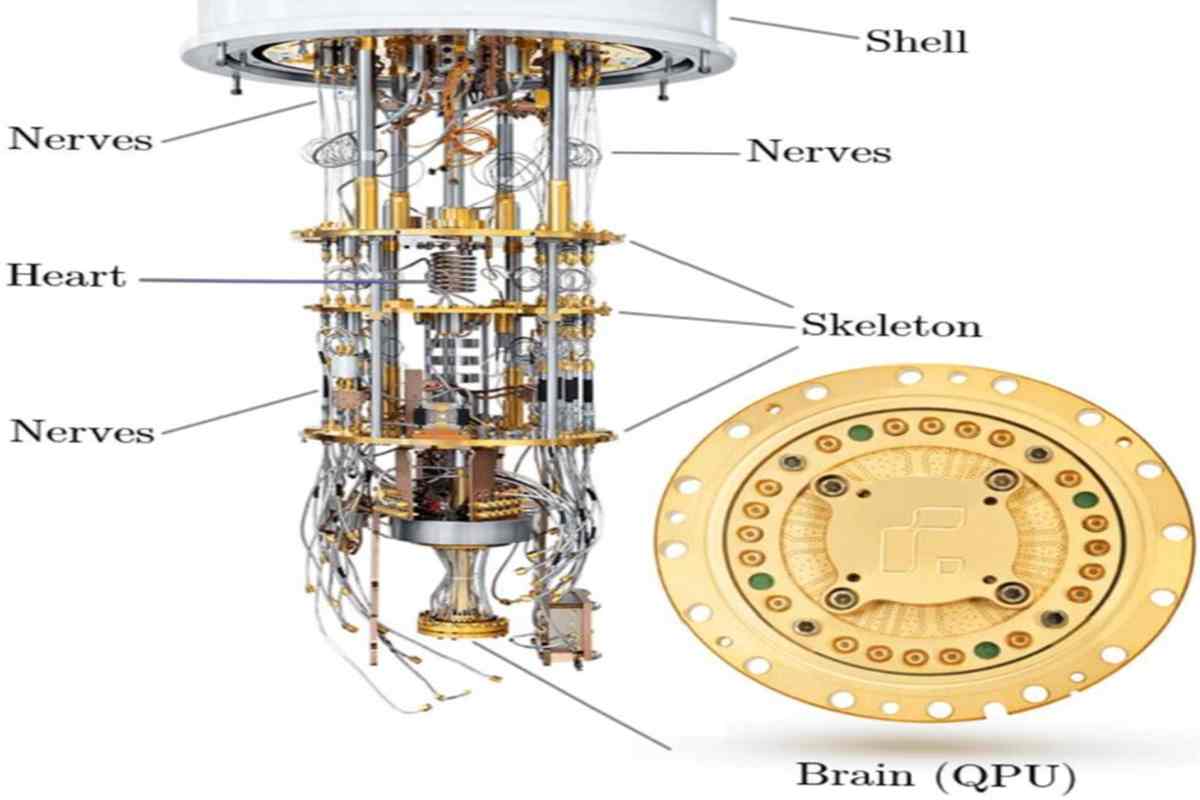
Quantum Computing: Redefining Computational Boundaries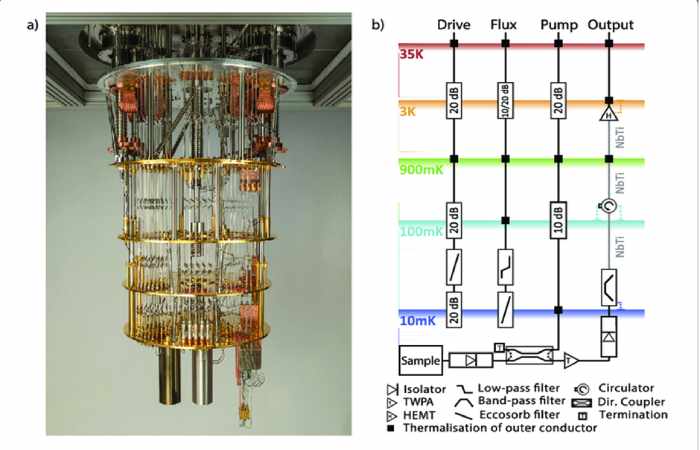
Quantum computing uses qubits instead of binary bits. Through:
- Superposition
- Entanglement
- Quantum interference
Quantum machines can evaluate multiple computational states simultaneously, solving problems that may take classical supercomputers millennia.
Enterprise Quantum Market Projection
| Year | Market Value (USD Billion) |
| 2024 | 3.2 |
| 2025 | 3.93 |
| 2030 | 12.5 |
| 2035 | 30.73 |
Enterprise quantum computing is expected to grow at a CAGR of 22.83% through 2035, driven by applications in:
- Financial modeling
- Drug discovery
- Logistics optimization
- Energy grid simulation
- Cryptography
McKinsey estimates the broader quantum technology ecosystem may generate up to $97 billion in revenue by 2035.
Edge AI vs Quantum Computing: Price & Capability Comparison
| Parameter | Edge AI Systems | Quantum Computing Systems |
| Infrastructure Cost | $5K – $50K | $10M+ |
| Power Requirements | Low | Extremely High |
| Cooling Requirements | Standard | Cryogenic |
| Latency Optimization | Excellent | Moderate |
| Optimization Problems | Moderate | Exceptional |
| Real-Time Processing | Yes | Limited |
| Deployment Complexity | Medium | Very High |
Hybrid Computing: The Future Architecture
The next-generation computing model is expected to integrate:
- Cloud Computing
- Edge AI
- Quantum Processing
This paradigm often referred to as Quantum Edge Cloud Computing (QECC) enables:
- Ultra-low latency analytics
- Quantum-secure encryption
- Large-scale IoT optimization
- Real-time industrial automation
Traditional cloud architectures struggle with latency and scalability in IoT ecosystems. QECC addresses this by combining edge responsiveness with quantum computational throughput, creating a scalable architecture for smart cities and industrial automation.
Enterprise Use Cases
Edge AI Implementation
- Predictive maintenance in manufacturing
- Autonomous fleet management
- Smart retail analytics
- Real-time patient monitoring
- Energy grid optimization
Quantum Computing Implementation
- Portfolio risk analysis
- Molecular simulation
- Supply chain route optimization
- Battery material discovery
- Climate modeling
A 2025 banking pilot demonstrated a 34% improvement in trade prediction accuracy using hybrid quantum computing in bond trading applications.
Enterprise Adoption Distribution (Projected 2028)
| Industry Sector | Edge AI Adoption | Quantum Adoption |
| Manufacturing | 65% | 22% |
| Healthcare | 58% | 18% |
| Finance | 49% | 41% |
| Energy | 46% | 35% |
| Transportation | 62% | 27% |
Strategic Implications for Businesses
Edge AI Enables:
- Cost-efficient automation
- Localized decision engines
- Improved cybersecurity
- Reduced network congestion
Quantum Computing Enables:
- Complex optimization
- Advanced cryptography
- Scientific discovery
- Risk modeling
Google anticipates that commercial quantum computing applications may arrive within five years, indicating near-term enterprise ROI potential.
Challenges Ahead
| Edge AI Challenges | Quantum Computing Challenges |
| Device heterogeneity | Error correction |
| Security risks | Qubit decoherence |
| Model optimization | Hardware instability |
| Distributed updates | Limited algorithms |
Despite challenges, by 2027 more than 50% of enterprise-generated data will be processed outside centralized data centers, signaling a permanent shift toward distributed computing frameworks.
Conclusion
Edge AI and Quantum Computing are not competing technologies — they are complementary layers in a unified computing stack. Edge AI addresses:
- Real-time inference
- Latency constraints
- Decentralized analytics
Quantum computing targets:
- Simulation
- Optimization
- Cryptographic security
Businesses that integrate these technologies through hybrid computing frameworks will be positioned to:
- Improve operational efficiency
- Reduce decision latency
- Accelerate innovation cycles
- Gain competitive advantage
The future of computing will be defined not by centralized cloud dominance, but by the convergence of edge intelligence and quantum-enhanced analytics across distributed digital ecosystems.